

It’s Not Community If It’s Extraction
What We Call Community Is Often Extraction—and Black Neurodivergent Women Know the Cost

The Language of Community Is Being Misused
“Many of the survival strategies Black people learned which enabled them to cope with life in a racist culture were not positive skills when applied to intimate interpersonal relationships.”
-bell hooks
I’ve been watching something quietly. Thread by thread. Message by message. Everyone’s talking about “community.” But too often, what they’re actually building are soft-access points, designed to extract from people’s labor, lineage, presence, or proximity and calling it kinship.
It can look like solidarity. It can sound like connection. But it feels like something else:
Access without responsibility
Language without lineage
Visibility without reciprocity
And for those of us who are multiply-marginalized, Black, neurodivergent, migrant, queer, disabled that distinction isn’t just philosophical.
It’s lived. It’s embodied. And it’s exhausting.
I’ve spent decades building real communities: Cross-continental. Offline and online. Donation-led, survivor-rooted, and structurally sustained.
Every time I raise my voice and build one, echoes rise and meet mine.
So I can tell when what people want isn’t community. It’s closeness without care. Let’s talk about it.
The Work Behind the Words: What I’ve Risked to Build Real Communities

I’ve led communities. Built them. Funded them. Protected them.
Cross-border. Under threat. In silence.
Many know me as an author. A lecturer. A systems speaker. Some know me as a disruptor. A grassroots organizer. A woman who’s coordinated refugee protection under threat. Advocated for equity in healthcare. Walked into schools no one else would. Held communities others forgot.
This isn’t performance. It’s legacy. I come from a matriarch who advised presidents and delivered babies under candlelight. Who made people feel seen even when she was made invisible. I wasn’t raised to inherit her spotlight. I was raised to continue her service.
So when I speak of care, I don’t mean it in theory. I’ve practiced it across borders, under pressure, often alone. And I’ve paid for it in full.
While others theorized care, I moved containers—aid, equipment, food, clothing directly to Libya during active conflict. No NGO banner. No institutional net. No PR spin.
Swedish banks froze my accounts for it. No explanation. No apology. Just automated suspicion from systems built to flag Black-led aid as risk. The same banks that quietly profit from instability across the continent.
Because a Black woman sending international aid without Western NGO oversight must surely be a risk.

While people sat on humanitarian ethics panels, I was coordinating international evacuations. When bombs went off in Beirut, the world forgot the Black women trafficked under layers of anti-Blackness. I didn’t.
I built safety networks and on-the-ground teams across Sweden, Lebanon, and Dakar managing everything from housing and documentation to evacuations and negotiations with militias. Funded the entire effort myself, and donated 1 million Dalasi from my savings so they could rest during Covid. Working 23-hour days.
While doing this, my own Gambian government seized my passports under pressure from those complicit in the trafficking networks. My name flagged. My body surveilled. My labor exploited.
And I still showed up. Not because it was sustainable. Because I center women and children in my work. Because some of us weren’t theorizing justice. We were surviving it. Implementing it. Paying the cost of it in real time. No team. No grants. No safety net. Just grit. Spreadsheets. Risk. Receipts.

So no I don’t perform care for optics. I don’t build community as branding. And I don’t enter conversations I haven’t earned my place in.
But when I speak, it’s because I’ve done the work. Quietly. Globally. In rooms that didn’t expect me let alone expect outcomes. I show up for community.
What Real Community Requires—Not Everyone Wants to Do It
People romanticize community like it’s a vibe.
But real community is structure. Practice. Repetition. Accountability.
It isn’t built on how many identity labels we share.
It’s built on what we’re willing to carry for each other, and with each other.Here’s what that actually looks like:
Observation over instant access
The people I trust most are the ones who watched before speaking.
They didn’t rush in. They didn’t declare: “Let’s be friends.”
They didn’t expect immediate intimacy.
They entered the village slowly, observing what it actually takes to be a villager. They watched where they could contribute.
They tracked where their strengths could fill in gaps and where their vulnerabilities, known and unknown, might be held with grace.
They didn’t perform people-pleasing.
They didn’t fear asking the right questions.
They took their time. That’s how community begins.
Shared risk, shared repair: If you can’t hold weight or accountability when things go wrong, you’re not in community. You’re in a performance of it.
Care without expectation of credit: If your solidarity disappears the moment your contribution isn’t praised, it was never sustainable.
Some of the most meaningful offerings are quiet, consistent, and never posted.Reciprocity that doesn’t mimic, but contributes: Community isn’t built on imitation. It’s built when people bring something real. Grounded. Additive. Copying someone’s language, energy, or aesthetics doesn’t build kinship. Showing up with your own tools, your own labor, your own rootedness,that does. Real community doesn’t orbit charisma or proximity. It’s not curated. It’s committed.
Real community doesn’t orbit charisma or proximity.
It doesn’t thrive on aesthetics.
It’s not curated.
It’s committed.
What Extractive Relationships Look Like in Community
Not all closeness is care.
And not all connection is community. Support Is sometimes Surveillance.
Not all closeness is care. And not all connection is community.
One of the hardest lessons I’ve learned—especially as a Black, neurodivergent woman who writes publicly is that people will mimic presence in order to gain access. They wrap consumption in the language of solidarity.
It often sounds like support, but it feels like surveillance.
They use words like “community,” “collaboration,” and “alignment”—but the exchange is hollow. There’s no risk, no reciprocity, no accountability. Just orbiting. Quietly extracting. This is what extractive relationships often look like in spaces labeled “community”:
Emotional labor without care
“I just want to understand where you're coming from…”
But they’re not listening they’re collecting. The ask isn’t rooted in care, but in their own need for access. You become a source, not a person.
Mirroring without acknowledgment
They repeat your language. Mirror your tone. Repackage your insights.
But they never cite you. Borrowed culture becomes content.
It’s not kinship. It’s quiet erasure.
Shared identity used as a shortcut
Just because we’re both Black, or neurodivergent, or women—
doesn’t mean we’ve built trust. Shared identity is not earned proximity.
Assuming alignment because of labels is still a form of entitlement.
“Collaboration” that only takes
This one sounds like: “I love your work—let’s talk.” But there’s no clarity. No compensation. No contribution. Just a vague orbit hoping to be fed.
People don’t always mean harm. But harm doesn’t require intent—just repetition. And when those patterns repeat without accountability,
what they’re calling community is actually a low-stakes ecosystem of emotional, intellectual, and cultural extraction.
I name this not to accuse but to interrupt the cycle. Because if we don’t name the ways people take without giving, mimic without citing, or linger without showing up we recreate the very systems we say we’re trying to undo.
Why I Gatekeep: Burnout, Boundaries, and Community Built Without Safety Nets
I’ve been called distant. Unavailable. Intense.
But what I actually am is clear.
Gatekeeping isn’t rejection. It’s pattern recognition. It’s nervous system protection for those of us who’ve watched our presence turned into performance.
Our language repackaged.
Our labor consumed in silence. Our lineages misnamed by those who didn’t ask where we came from only what we could give.
I don’t gatekeep because I’m unkind. I gatekeep because I’ve lived what happens when people assume proximity is a pass. To my energy.
My work. My inheritance.
Not everyone earns the right to your story. Or your time.
Or your vulnerability. Sometimes not even your empathy.
This isn’t about elitism. It’s about self-preservation.
Especially for those of us whose very existence is treated like a resource. People often confuse shared identity for shared experience.
They assume that if we’re both Black, or both autistic, or both women, then we’re aligned. But lived experience is not a monolith. And identity is not a shortcut to trust.
My work exists where few are willing or able to stand: At the intersection of Blackness, neurodivergence, queerness, migration, matriarchal legacy, and responsibility without institutional safety nets.
I didn’t “adopt” community values I was raised in them.
Where proximity was earned.
Where lineage was oral, not performative.
Where care wasn’t a brand it was survival.
I don’t owe access because someone sees themselves in me.
I don’t owe emotional openness just because we share a label.
And I don’t interpret admiration as alignment. If you want proximity, you build it. Over time. With clarity. With care. Not charisma. Not entitlement. Not vague praise.
This is especially important for those with access and institutional power.
If my work resonates, ask not what more you can receive—but what doors you can open. Not just what you’re inspired by—but what you’re willing to support.
Not just what moved you but what action you’ll take from it.
Because trust doesn’t move on demand. It moves with continuity. And community real community requires responsibility from everyone in the room. Especially those who were always handed the microphone.
From Recognition to Reciprocity: What I Expect Now
Because admiration without contribution is still extraction.
If you’re here through Substack, LinkedIn, Threads, or word of mouth. I’m glad something brought you. But let’s begin with clarity. I’ve already poured deeply. Into people. Into infrastructure. Into communities across borders. I’ve paid with labor, safety, health, and time.
So when someone lands in my inbox with vague praise and vague asks, I no longer assume alignment. If my work has resonated with you if you’ve quoted me, cited me, reposted me, or found language here that clarified your world—ask:
Have I shared her work in rooms she’s not in? Have I recommended her for keynotes, panels, or consulting? Have I supported her financially through bookings or donations for the communities she supports? Have I linked to her writing instead of paraphrasing her? Have I asked what she needs, not just what I want to receive?
Many want to be poured into. Fewer ask what they’re willing to pour back. And let me be direct: Shared identity racial, gendered, neurodivergent—is not a pass. Proximity is not permission.
I am not your shorthand for access. I’m not here to fulfill unearned intimacy cloaked as solidarity.
My time is finite. My work is in motion. When I show up I am all in. And my boundaries? They’re not walls. They’re scaffolding. Built for sustainability. Built to protect what I’ve built.
So if you’re here: thank you. But don’t just watch. Don’t just admire.
Align. Contribute. Participate—without extraction.

If This Resonates
You’ll find more of my essays on intergenerational healing, boundaries, and what happens when we stop performing care and start practicing it.


To book me for keynotes, panels, or consulting:
If you're an organization, institution, or collective committed to real change not checkbox diversity you can contact me directly: [https://lovettejallow.com/] | [Lovette@Lovettejallow.com]
I speak internationally on subjects including but not limited to African matriarchal systems, Fulani governance, neurodivergence in pre-colonial societies, anti-racism, intersectionality, and structural violence.
My talks draw from lived experience, academic research, and cultural fluency across seven languages. I do not dilute or perform knowledge for spectacle. I teach from lineage, not theory.
Who is Lovette Jallow?
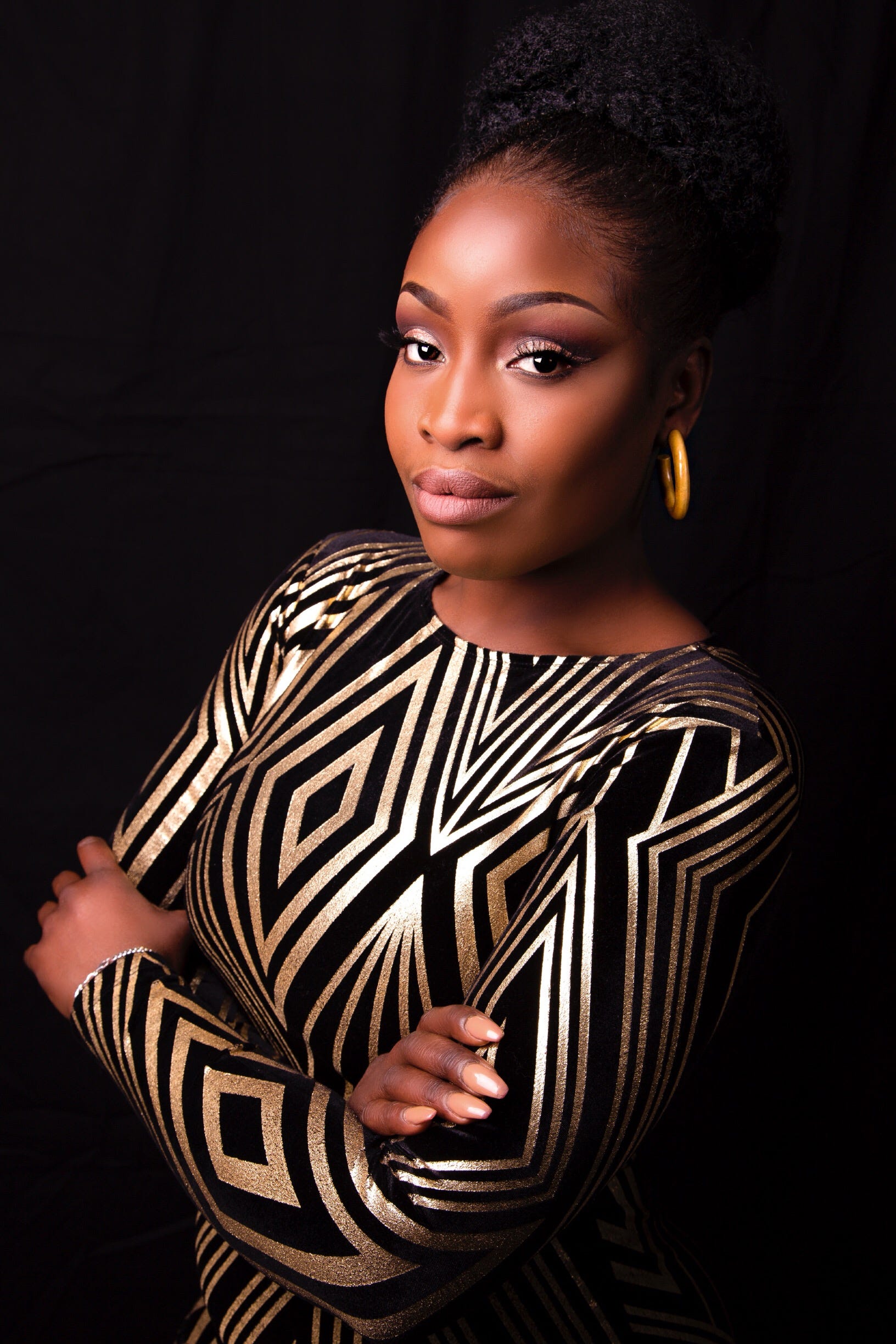
Lovette Jallow is one of Scandinavia’s most influential voices on systemic racism, intersectional justice, and human rights. A nine-time award-winning author, keynote speaker, lecturer, and humanitarian, she specializes in neurodiversity, workplace inclusion, and structural policy reform.
Lovette brings an unmatched perspective rooted in both lived experience and professional expertise. Her work bridges the gap between theory, research, and action, helping organizations move beyond performative diversity efforts toward sustainable, structural change.
Her expertise has been sought by global publications like The New York Times, on high-profile legal cases, and by international humanitarian organizations, where she has provided critical insights on racial justice, policy reform, and equity-driven leadership.
Follow Lovette Jallow – DEIB Strategist, Keynote Speaker & Humanitarian:
Website: lovettejallow.com
LinkedIn: linkedin.com/in/lovettejallow
Instagram: instagram.com/lovettejallow
YouTube: youtube.com/@jallowlovette
Twitter/X: twitter.com/lovettejallow
My mind is blown. I've been navigating this word "community" for a long time: people pleasing until I learned how to set boundaries, and wary of exploitation should I fail to defend their porosity as I've evolved. I don't think I've ever encountered someone with such courage, clarity and conviction. Thank you for sharing your voice with the world and asking something from "those who want to do better". I can't pay for every subscription but I truly cannot NOT support you. Sign me up. Damn, girl!
Thank you for your labor. You have given me much to think about within my own actions and have given me another perspective with which to view myself and others. I realize my appreciation doesn't pay the bills, but it's all I have to offer at this point in my life. I will continue to forward your work to those I believe will take it in and I hope at some point it translates into something more for you.